early adjective Definition, pictures, pronunciation and usage notes
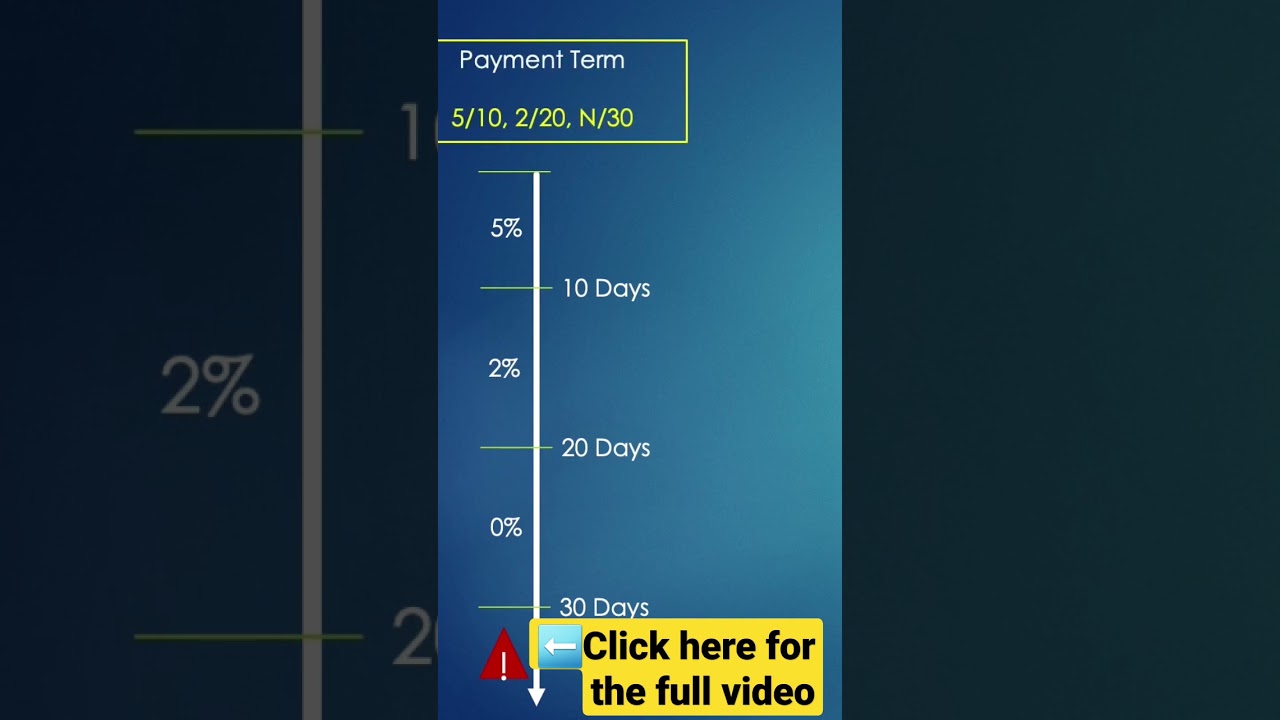
After negotiations, the two parties agreed on a sliding scale discount that offered a maximum 2% savings, with the discount gradually eroding at a rate of .4% every five days. Wanting to encourage faster payment for its current shipments, Chocolobster reached out to Good Eats, offering a dynamic type early payment discount. These discounts can either be offered by the seller or requested by the buyer — with some manner of negotiation typically occurring before both parties agree. While the other two options focus on standardized discounts that apply across customers and transactions, a dynamic discount is instead determined on a per-invoice basis. Typically, these offers will stretch from the initial invoice date until the due date, offering the maximum savings on the invoice date and no discount on the due date. Conversely, a sliding scale discount adjusts the percentage savings based on when the payment is made before the due date.
Order to Cash
A prompt payment discount example would be “2/10 Net 30.” On a $5,000 invoice, if you pay within 10 days, you only owe $4,900. In most cases, early payment discounts aren’t taxed separately. By shortening the time between invoicing and receiving payment, vendors can reduce their DSO, a key metric in evaluating cash flow efficiency. Trade credit discounts reward early payment of past invoices by granting credits toward future purchases. For example, a supplier might offer a 2% discount if paid within 5 days, 1.5% within 10 days, and 1% within 15 days. Early payment discounts are those untapped savings opportunities that you may miss if you’re not vigilant enough with your accounts payable.
By considering the perspectives of all parties involved and structuring the discounts carefully, businesses can maximize the benefits of this financial strategy. While early payment discounts offer clear benefits, they must be managed carefully to avoid potential pitfalls. To capitalize on the discount, buyers must pay sooner than they might otherwise, which can be challenging if they are operating on tight margins or have other financial commitments. From a financial standpoint, the impact of early payment discounts can be quite substantial. For buyers, the savings accrued from taking advantage of these discounts can be significant, especially when considered over multiple transactions and extended periods.
For the company purchasing goods, 2/10 net 30 days therefore represents a very attractive return on cash of 36.7% – but equally, the discount equates to a high cost of funding from the point of view of the supplier. A common early payment discount set-up is expressed as ‘2/10 net 30 days’. For businesses dealing with VAT or GST, rules may vary—some tax authorities require VAT to be calculated before the discount.
Automation tools can further streamline invoice processing, ensuring that payments are made on time and supporting overall financial health. By prioritizing early payments, businesses can establish a consistent pattern of timely payments, which not only avoids penalties but also enhances their creditworthiness. Early payment discount accounting provides businesses with greater control over their financial strategies.
Early payment discount calculation example
- Since one-third of suppliers have reported that delayed payments have put their business at risk of closing, it’s definitely worthwhile to consider implementing a discount for the purpose of boosting cash flow.
- An early pay discount is a price break for paying a supplier sooner than the standard due date.
- Canada’s BDC Bank offers some simple, back-of-envelope calculations to help assess whether an early payment discount is financially savvy.
- To calculate the discount, multiply the discount percentage (e.g., 2%) by the total invoice amount.
- For example, a supplier might offer a 2% discount if the invoice is paid within 10 days, while the total invoice is due in 30 days.
- While the math is simple, the strategic implications can be significant over time, especially for high-volume transactions.
- A predetermined dollar amount is subtracted from the invoice for early payment.
Last Updated October 22, 2025 Every business needs cash flow to survive. Last Updated November 20, 2025 The success of your business depends heavily on customers paying If your business is in a period of negative cash flow, it can be very beneficial. A quick and easy way to determine if an early payment discount would save you money is to check the rates and fees for your existing lines of credit or alternative funding sources. Rather than having to wait 30 days to receive cash for these products, O’Leary’s Dairy only has to wait up to 10 days, as long as the customer takes the discount.
Prompt payment discounts help to improve the availability of working capital. Getting your customers to agree to a discount period of 2/10 or 1/10 terms helps replenish cash flow and keeps you from dipping into extreme levels. If a customer pays within 10 days on a 2/10 term, the early payment discount is $20. Always paying invoices on time or early will help establish a customer’s business credit. There is a multitude of advantages to early payment discounts.
Static Discounts
For example, if you already sell your products or services with razor-thin margins, any discount might mean closing deals at a loss. Altogether, the chain ordered 1,000 Chocolobsters and 260 ClamCrunches, resulting in an invoice total of $23,120. As such, the final discount itself will commonly operate the same as a static or dynamic type. Since the figures in this format are rigid, calculating the appropriate discount is straightforward. Some technology partners also enable companies to switch seamlessly between supply chain finance and dynamic discounting as the need arises.
Will early payments benefit your cash flow?
If no one else in your industry is offering an early payment discount, you may be able to gain an edge over your competitors. Early payment discounts can be a good way to build customer loyalty, but they may also start to eat into your profit margin. To learn how Invoiced can handle all manner of invoicing complexities — from early payment discounts to dispute resolution to rebates and credits — schedule a demo today. Our automated accounting tools can help you manage your incoming and outgoing payments more efficiently while encouraging more accurate and consistent financial processes and reporting. As with everything, there are tradeoffs for early payment discounts, and a poorly executed or mismanaged strategy can deliver more disadvantages than value.
Vendor’s compensation for state sales tax is 1.05% of total amount of sales and use taxes due; as of January 1, 2025, maximum compensation drops from $1,500 per month to $750 per month Discount will be calculated for taxpayers that file electronically using MyTax Illinois Most jurisdictions limit the size of the discount or amount of credit a business can claim in a reporting period (the maximum discount cap). Seasonal ad scheduling is a critical strategy for businesses looking to capitalize on the… It is a clear-cut case of a win-win scenario where the promptness of payment is rewarded, and the velocity of money is increased, thereby energizing the entire economic ecosystem. While this is a direct cost saving for the buyer, the seller benefits from receiving $9,800 promptly, which can be reinvested into the business sooner than expected.
- This proactive financial maneuver is not just about spending less; it’s about investing in the efficiency and health of a business’s financial operations.
- Early payment discounts are a strategic tool that can be mutually beneficial for buyers and sellers.
- Good Eats paid out the invoice through Chocolobster’s payment portal on the fifth day after invoicing, meaning the grocery chain netted a 1.6% savings rather than the full 2%.
- At its core, an early payment discount offers buyers a percentage reduction on the invoice total if payment is made before the due date.
- Common practices include setting a fixed percentage discount for payments made within a certain timeframe (e.g., 2% for payments made within 10 days).
- Receivables sold under a supply chain finance program are nominally discounted at a rate tied to the credit cost of the buyer, which in most cases is better than the credit cost a supplier would pay to its own financing providers.
Factoring provides suppliers a direct path to improve liquidity by selling their accounts receivable to a factoring company at a discount. Money saved through discounts can be redirected into other areas of the business, such as innovation, hiring, or technology upgrades, enabling greater agility and competitiveness. Prompt payments can enhance goodwill and lead to better negotiations, priority service, or favorable terms in future transactions. Over time, these small savings compound into significant financial advantages. Prompt payments lower the chance of default or delayed collections, reducing the need to follow up on overdue accounts or write off bad debts.
They could use this surplus to pay suppliers early, https://tax-tips.org/steps-for-reconciling-irs-form-941-to-payroll/ securing a discount that effectively earns them a return on their excess cash, which might otherwise yield minimal interest if left in a bank account. This allows buyers to optimize their discounts based on their current cash position. When payments are received ahead of schedule, sellers can reinvest the capital back into their business more quickly. Moreover, this practice can strengthen the buyer-seller relationship, as sellers appreciate the improved predictability of cash inflows, and buyers enjoy the financial benefits of reduced costs.
Automation helps by eliminating manual tasks and reducing human error, accelerating the entire workflow from invoice capture to final payment. Encouraging early payments can help vendors stabilize their revenue streams, making it easier to plan for expenses and growth initiatives. Prioritizing early payments minimizes the risk of missing due dates and incurring costly late fees. Paying invoices early fosters goodwill with suppliers, building trust and reliability. While each discount may seem small, the savings add up substantially over time. Factors like cash flow and market conditions can influence the discount amount.
With the two parties working together on 2/10 net 30 terms, Johnson Grocers would save $39.58 on this particular invoice. Let’s break down the first discount listed, 1/10 net 30, piece by piece. These transactions typically involve adjusting entries in the financial records for both parties.
The Benefits of Early Payment for Sellers
Gold and silver aren’t just shiny objects—they’re savings that can protect purchasing power. If inflation is running at 3%, and your savings account is earning less than that, your future purchasing power is being steps for reconciling irs form 941 to payroll taken from you. Most people think saving in a savings account, CD, annuity, or money market is “safe.”
If the annualized savings exceed the return they could earn elsewhere with those funds, it makes financial sense to take the discount. However, calculating the true value of these discounts requires a careful analysis of the terms and the impact on both parties’ financial health. This could mean negotiating a larger discount or more favorable payment terms on future purchases. Early electronic payments can reduce the need for paper-based invoicing and checks, contributing to a company’s sustainability goals.
Introduction to Early Payment Discounts
While traditional static discounts like 2/10 net 30 are common, vendors use several other early payment strategies to incentivize buyers. Dynamic discounting optimizes working capital for both buyers and suppliers based on real-time needs. It is often managed through AP automation platforms that enable suppliers to offer real-time discounts at any point before the due date. For example, under 2/10 net 30, a 2% discount is available if the invoice is paid within 10 days; otherwise, full payment is due in 30 days. The types of early payment discounts vary based on negotiation strategies, customer relationships, and cash flow needs.
Early payment discounts are financial incentives offered by vendors to buyers for paying invoices before the due date. Sliding scale discounts offer flexibility for buyers while still incentivizing timely payments. Taking advantage of early payment discounts strengthens supplier relationships and encourages prompt payments, allowing suppliers to better manage their cash flow. More than half of all states allow certain businesses to claim a vendor discount for filing sales tax returns and remitting tax payments by the due date. Early payment discounts represent a strategic financial lever that, when pulled wisely, can yield dividends for both buyers and sellers. Consider the example of a manufacturing company that regularly purchases raw materials from a supplier offering a 2% discount for payments made within 10 days.
What if a simple shift in your payment habits could unlock hidden savings you never knew existed? When purchasing organizations consistently take advantage of these discounts, the savings can add up significantly and have a positive impact on profitability. Automation also ensures your discounts are applied automatically, leading to consistent cost savings and improved AP efficiency. Carefully evaluate the benefits of taking early discounts against the need to retain cash for other investments or obligations.